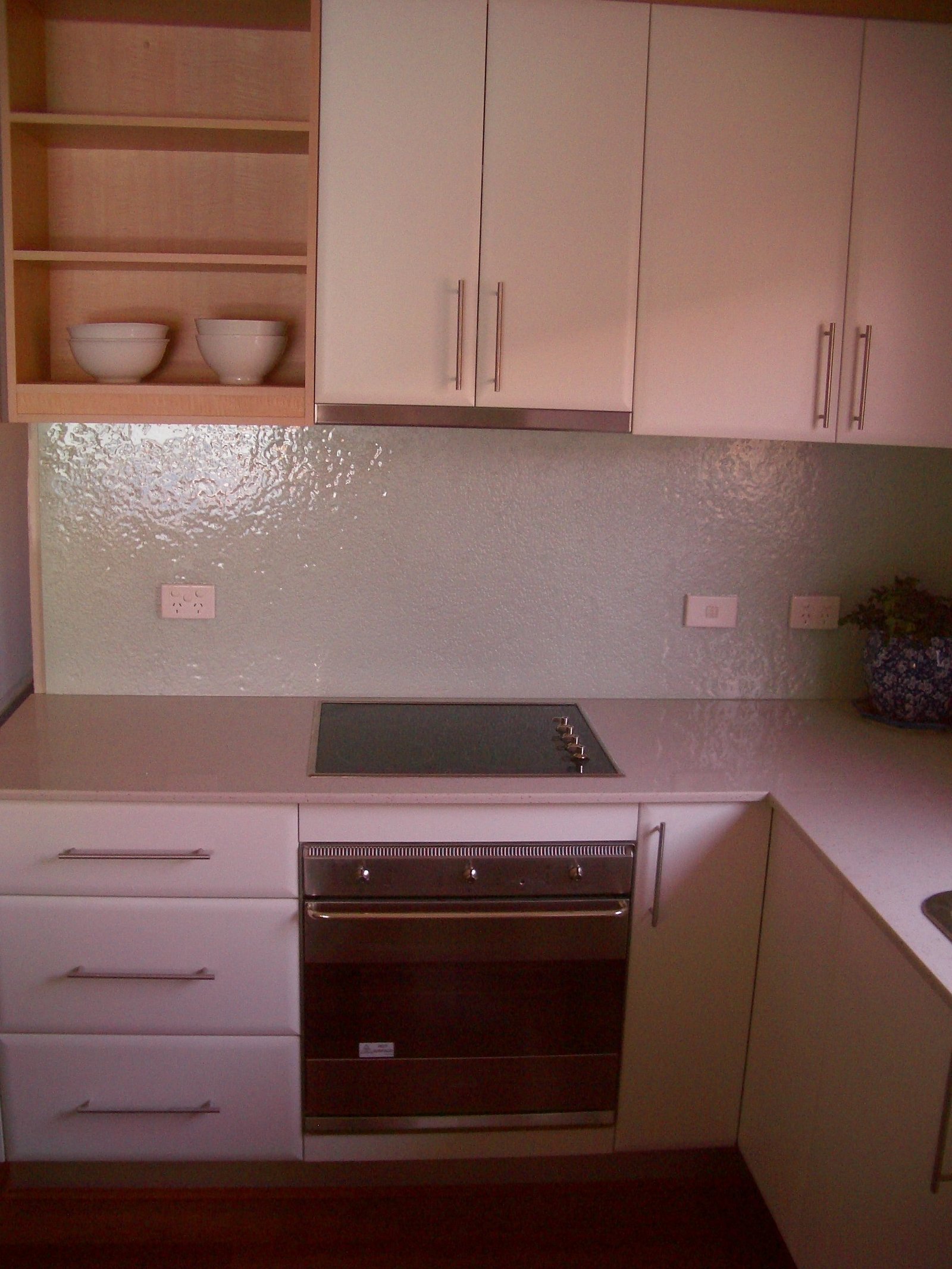
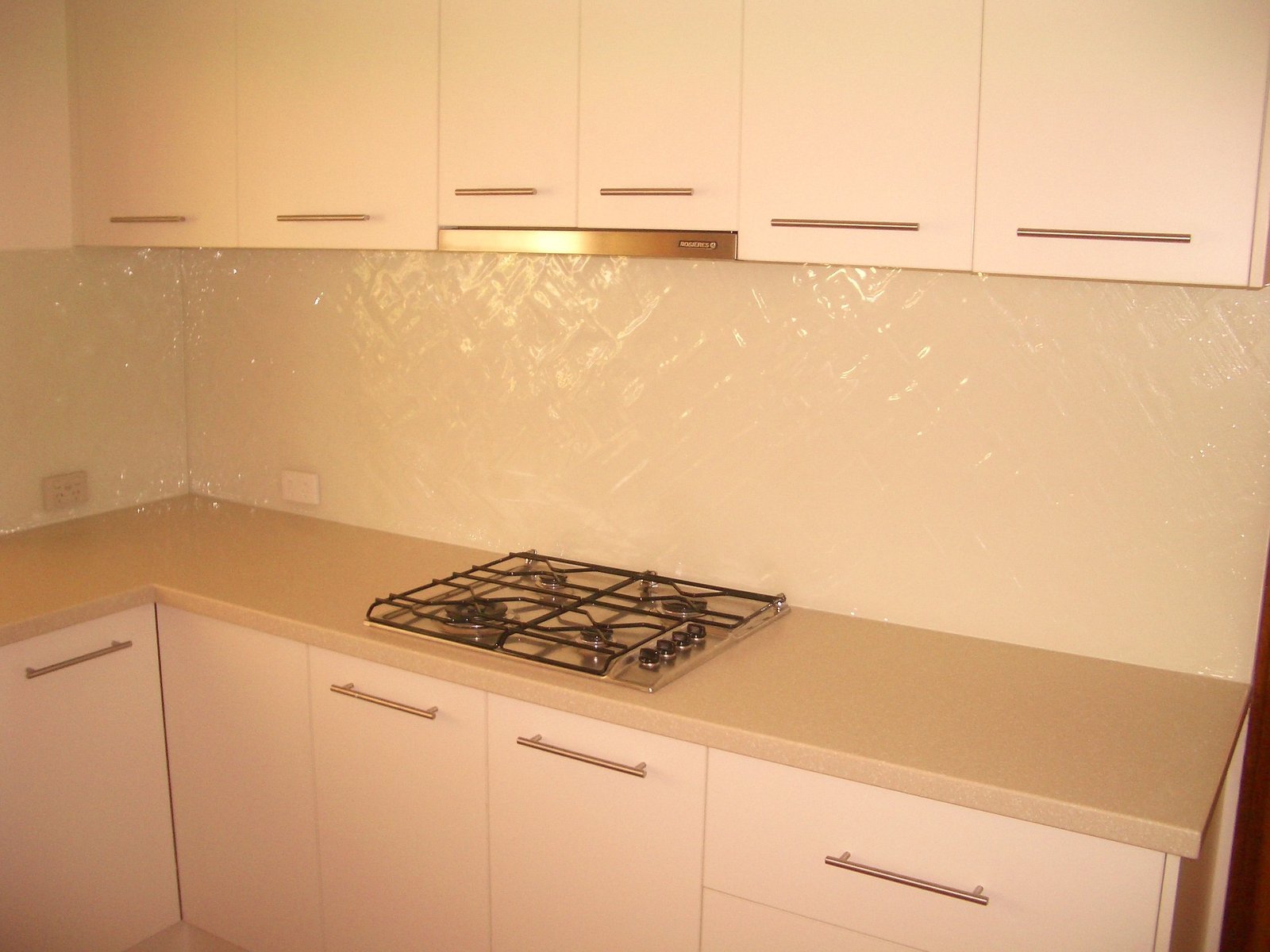
Slumped glass — also called kiln-formed glass, kiln-cast glass, or architectural textured glass — is glass that has been heated in a kiln until it softens and flows over or into a custom mould. The glass takes on the shape and texture of the mould surface, producing a three-dimensional panel with depth, pattern and a tactile quality that flat glass simply cannot achieve.
When the glass cools, it holds that form permanently. The result is a panel that catches light from every angle, creates visual movement throughout the day, and turns what would otherwise be a functional surface into a feature piece. No painter, no laminate, no ceramic tile can replicate it.
Every piece of slumped glass starts life as a standard flat sheet of float glass. We typically use low iron glass — also called Starfire or ultra-clear glass — which eliminates the green tint found in standard float glass. This is important because any colour applied to slumped glass will read truer on a low iron base.
The mould determines the texture of the final piece. At Harbour Glass, we use seven commercial base mould patterns alongside a library of custom moulds developed in-house over nearly two decades. The mould material, surface preparation and release agents all affect how the glass flows and what the final texture looks like. Getting this right is a craft that takes years to develop.
The flat glass is placed in our kiln on top of the mould and heated to precise temperatures — typically between 600 and 750 degrees Celsius depending on the desired result. At these temperatures, glass behaves more like a very thick liquid than a solid. It softens gradually, loses its rigidity, and begins to conform to the mould surface beneath it.
The rate of heating, the peak temperature, the hold time at peak, and the rate of cooling are all controlled variables that affect the outcome. Too fast and the glass can crack. Too hot and the surface loses definition. The kiln programming is as important as the mould itself.
Our kiln is the largest between Newcastle and the Gold Coast. It can accommodate large architectural panels that smaller kilns simply cannot produce. This matters when a client needs a slumped feature panel that spans a full wall section or a large shower recess — constraints that force smaller operations to join multiple pieces and introduce visible seams.
Once the glass has formed, it must be cooled slowly and carefully in a process called annealing. Rapid cooling introduces stress into the glass structure that can cause cracking immediately or weeks later under normal use. Proper annealing eliminates that stress. It is not a fast process. It cannot be rushed without consequence.
Slumped glass used in applications requiring safety glazing — splashbacks, shower screens, doors, pool fencing, and balustrades — must be toughened to AS/NZS 2208 and AS/NZS 4667. Toughening is carried out after the slumping process in a separate heat treatment that changes the internal stress structure of the glass, making it many times stronger than annealed glass and causing it to break into small, relatively harmless fragments rather than large shards if it fails.
It is worth noting that glass cannot be re-slumped after toughening. Toughening locks the molecular structure. Any cutting, drilling or heat work must be completed before the toughening step, which is why accurate templating and planning before fabrication matters so much.
This is the quality that makes slumped glass genuinely different from any other interior material, and it is not a marketing claim. It is physics.
When glass softens in a kiln, the flow of the material over the mould is influenced by the exact temperature gradient in the kiln chamber, the position of the glass on the mould, microscopic variations in the glass thickness, and atmospheric conditions in the workshop on that particular day. These variables cannot be perfectly controlled or precisely replicated.
Two panels made from the same mould, on the same day, in the same kiln, will have the same base pattern but subtly different surface qualities. The texture depth, the surface tension marks, the way the edges respond to the mould — these differ from piece to piece. Run your finger across two panels from the same batch and you will feel it.
For an interior designer or a homeowner who wants something that is genuinely one of a kind — not a product sold from a warehouse catalogue but something that exists in exactly one form in the world — this matters. It is the difference between specifying a material and commissioning a work.
Beyond our standard commercial patterns, Harbour Glass has developed a proprietary range of kiln-formed finishes that combine slumped glass textures with specialty paint effects. These are not available from any other supplier. They are developed, refined, and manufactured exclusively by us.
A stone-like texture with the visual and tactile weight of carved rock. ROCKfx panels have a depth and density that makes them read as architectural elements rather than just surfaces. Available in the full 40,000+ colour range, although earthy tones — slate greys, ochres, terracottas, and deep greens — are the natural fit.
A finer, softer texture that references the tactile quality of suede or brushed fabric. Where ROCKfx is bold and elemental, SUEDEfx is refined and quiet. It works particularly well in neutral tones where the texture adds dimension without competing with other design elements. The Whisper White colourway is one of our most requested finishes.
A dynamic, high-energy pattern with a metallic quality that shifts dramatically under changing light. RAPIDfx is the pattern for clients who want a statement. It is not subtle. It is designed to be the centrepiece of the room it occupies.
The versatility of kiln-formed glass is one of its most underappreciated qualities. Most people encounter it first as a splashback and stop there. The full range of applications is considerably broader.
The most common residential application. A slumped glass splashback in a kitchen, bathroom, or laundry transforms the space in a way that painted flat glass cannot. The texture adds a layer of visual interest that reads differently in natural daylight, under task lighting, and at night. Toughened to safety glazing standards, it is just as practical as any other splashback type and considerably more distinctive.
Slumped glass panels can be incorporated into frameless and semi-frameless shower screen designs as fixed panels, providing both privacy and visual interest. The texture diffuses light without blocking it entirely, creating a softly illuminated shower environment that standard frosted glass cannot match for quality.
Sidelights alongside entry doors, feature panels in internal doors, and window panels in bathrooms and stairwells are all well-suited to slumped glass. The texture provides natural privacy screening at any viewing angle without requiring frosting compounds or films that degrade over time.
Internal and external architectural privacy screens use slumped glass to divide spaces without enclosing them. The glass allows light to pass while obscuring clear sightlines. In commercial settings — offices, reception areas, retail environments — slumped glass screens make a strong design statement while serving a functional purpose.
Large-format slumped glass panels used as interior cladding or feature wall elements are increasingly common in high-end residential and commercial projects. Our kiln capacity allows us to manufacture panels large enough for these applications without joins, which is a limitation that stops most competitors from offering this service at all.
Custom slumped panels are used as table top surfaces in furniture, as backings for decorative mirrors, and as business signage panels where the texture creates a distinctive brand impression. We have supplied slumped glass to architects, interior designers, furniture makers, and commercial fit-out contractors across NSW.
Homeowners considering textured glass surfaces sometimes ask how slumped glass compares to alternatives. The comparison is worth understanding clearly.
| Material | Texture Source | Unique Per Piece? | Safety Glazing Compliant? | Longevity |
|---|---|---|---|---|
| Slumped glass | Kiln-formed, inherent to the glass | Yes | Yes (when toughened) | Permanent |
| Sandblasted glass | Surface abrasion | No (uniform) | Yes (when toughened) | Can accumulate oils over time |
| Frosted film | Applied adhesive film | No | No (film only) | Degrades, peels at edges |
| Textured acrylic | Moulded polymer | No | No | Yellows and scratches |
The key distinction is that the texture in slumped glass is within the material itself — it cannot be scratched off, stripped, or degraded by cleaning. A slumped glass panel installed today will have exactly the same surface quality in thirty years. Nothing applied to the surface of glass can make that claim.
If you are an architect, interior designer, builder or homeowner considering kiln-formed glass for a project, the starting point is a conversation with us about the application, the desired visual outcome, and the available mould patterns. We will guide you through our standard patterns and the Disrupt range, show you samples, and advise on what toughening and sizing constraints apply to your specific application.
We supply slumped glass to projects across the Coffs Coast and broader Mid North Coast — from Grafton and Yamba in the north to Nambucca Heads, Bellingen, Urunga, Sawtell, and Woolgoolga. For architects and designers working on projects further afield, we also supply to Newcastle and Northern NSW. If you are looking for glaziers near you who genuinely manufacture this product in-house rather than ordering it in, you will not find that capability closer than our North Boambee Valley workshop.
Yes. Slumped glass can be combined with our standard painted glass process to produce coloured textured panels. With access to over 40,000 colours across our two paint banks, colour matching to virtually any specification is possible. We match to Dulux, Resene, British Paints, Wattyl, and Harbour Glass proprietary colours.
Yes. The kiln process, mould preparation, annealing time, and the individual nature of each piece means slumped glass costs more than a standard painted flat glass panel. For clients who want a feature surface — something that commands attention and holds it — the price premium is justified by a result that is simply not achievable any other way.
Lead times depend on the kiln schedule and complexity of the project. Standard production runs are typically two to four weeks from confirmed order to installation-ready panels. Large or complex projects may require longer. We will give you a specific timeline when you enquire.
Yes, with appropriate toughening and hardware specifications for the environment. External applications — feature cladding, privacy screens, outdoor feature walls — require consideration of thermal expansion, UV exposure, and wind load. We can advise on the right specification for any external application.