When it comes to kitchen renovations on the Coffs Coast, homeowners are increasingly choosing glass splashbacks over traditional tiles. But is glass genuinely the better option, or is it just a trend? We break down the pros, cons, and hidden costs of each.

There’s a reason glass splashbacks have become the go-to choice for premium kitchen renovations across the Mid North Coast. Unlike tiles, a glass splashback offers a completely seamless surface — no grout lines to stain, no gaps to trap grease, and no visible joins to interrupt the visual flow.
At Harbour Glass, we paint each splashback in-house using low iron glass as standard. Low iron glass eliminates the green tint you’ll see in regular float glass, meaning the colour you choose is the colour you get. With over 40,000 colours in our system, the design possibilities are virtually limitless.
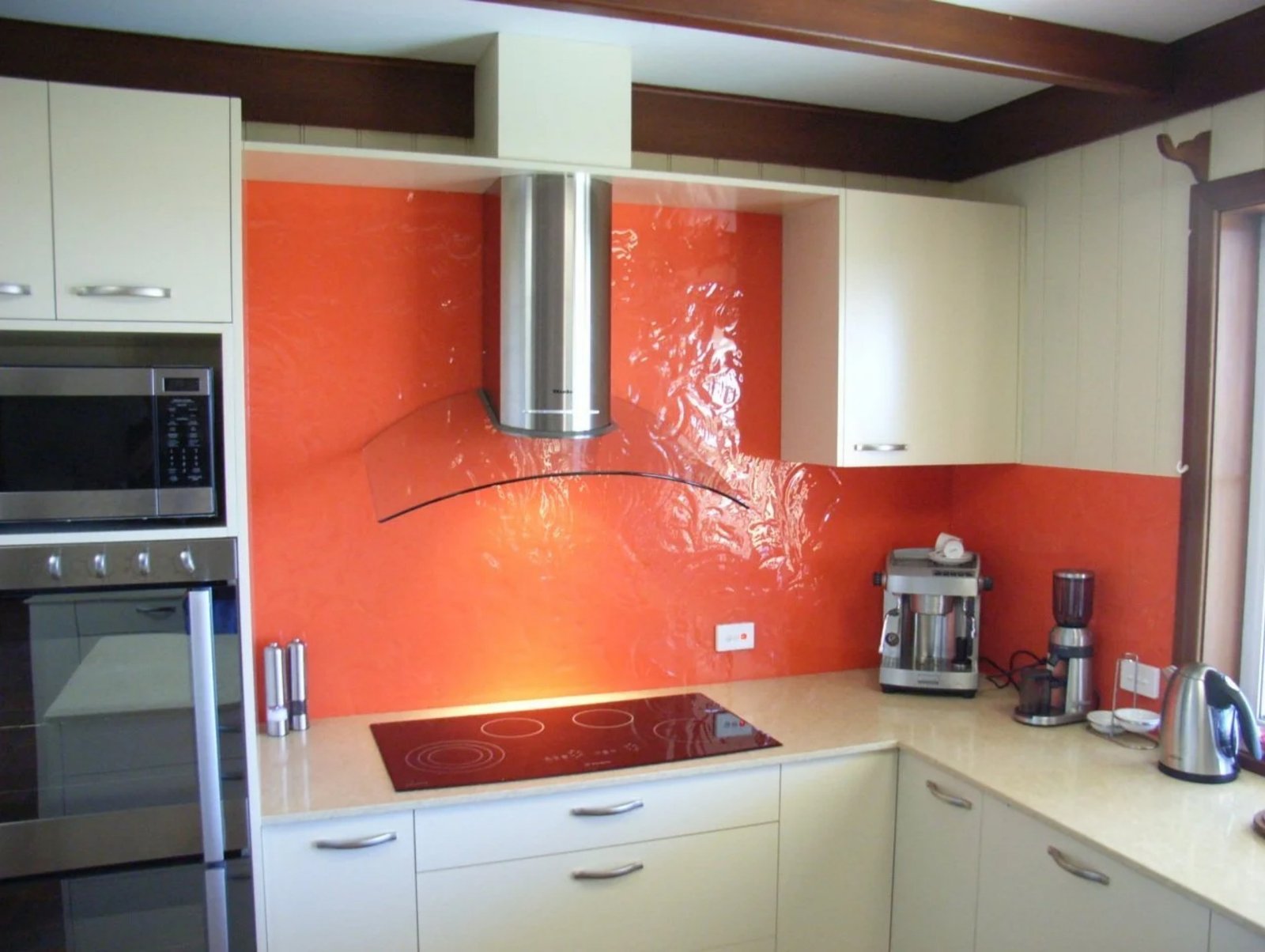
Tiles aren’t going anywhere. For bathrooms, feature walls, and areas with extreme heat exposure (directly behind a commercial-grade gas burner, for instance), tiles can be the practical choice. They’re also suitable for DIY installations — something glass splashbacks are not.
However, the hidden cost of tiles is maintenance. Grout absorbs moisture, stains, and bacteria. Within 12-18 months, even the best-sealed grout begins to discolour. Re-grouting a full kitchen splashback costs $300-$600 and needs repeating every few years. Over a decade, tiles can cost more than glass.
| Factor | Glass Splashback | Tiled Splashback |
|---|---|---|
| Daily cleaning | Spray & wipe | Scrub grout lines |
| Grout maintenance | None | Re-seal annually, re-grout every 3-5 years |
| Bacteria resistance | Non-porous surface | Grout absorbs bacteria |
| Colour fading | Paint is on the back — protected | Surface glaze can wear |
| 10-year cost | Installation only | Installation + ongoing grout maintenance |
A professional glass splashback installation typically takes a single day. We measure on-site, fabricate in our workshop at 92-98 Industrial Drive, and install with minimal disruption. The process from measure to install is usually 5-7 business days.
Every panel is toughened to AS/NZS 2208 — the same safety standard applied to shower screens and pool fencing. If a toughened glass panel does break (extremely rare with a splashback), it shatters into small, blunt cubes rather than sharp shards.
“We work to a standard, not a price. Every splashback we produce is manufactured on low iron glass, toughened to Australian Standards, and painted in-house. There are no shortcuts.”
— Harbour Glass team
For most kitchen applications, glass splashbacks are the superior choice — easier to clean, more hygienic, longer-lasting, and visually seamless. If you’re renovating a kitchen on the Coffs Coast and want something that looks as good in ten years as it does on day one, glass is the way to go.
Ready to explore your options? Request a free quote or book a free measure — we’ll come to you anywhere from Grafton to Nambucca Heads.