The updated AS1288:2021 standard changed the rules for glass balustrades. Laminated glass, spigot restrictions, and what it means for your project.
Before diving into the regulatory changes, it helps to understand the two most common glass balustrade systems installed across NSW.
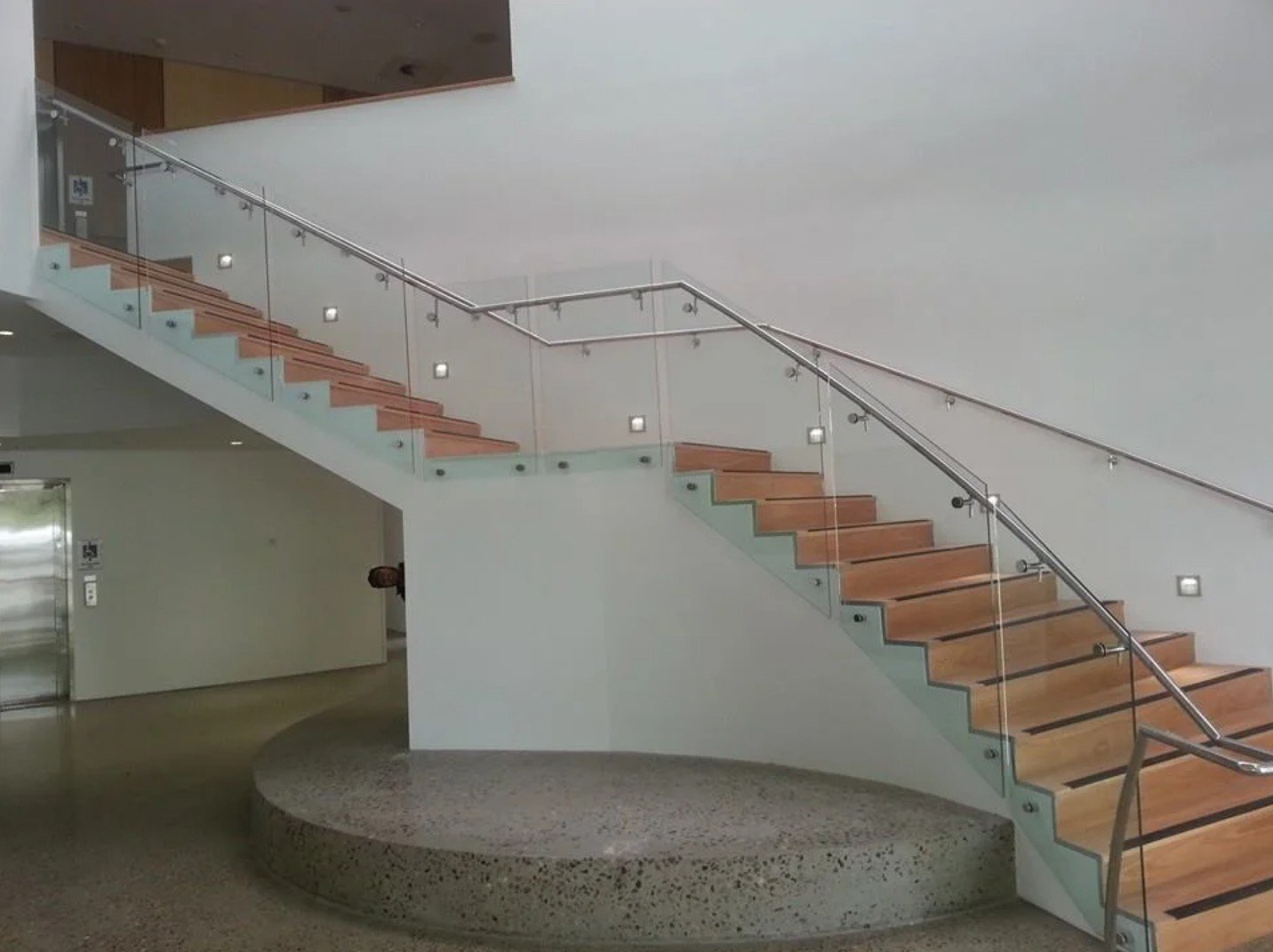
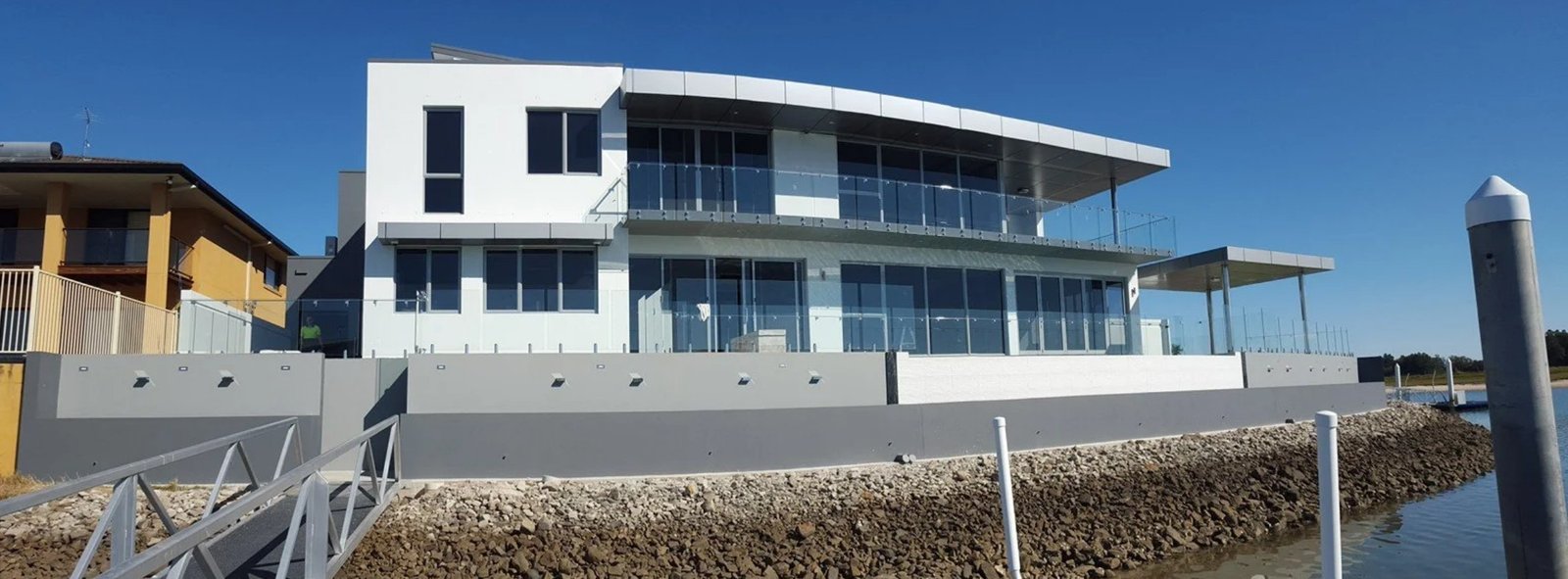
Frameless glass balustrades use stainless steel spigots or channel systems to secure the glass panels without any visible frame. The result is a completely unobstructed view — the reason they’re the preferred choice for balconies, mezzanines, staircases, and pool areas throughout the Coffs Coast and beyond. The glass does all the structural work.
Semi-frameless glass balustrades incorporate subtle aluminium or stainless steel framing — typically a top rail, posts, or both — while still maintaining a clean, contemporary aesthetic. The framing provides additional structural support, which can simplify compliance in certain applications.
Both systems remain popular and are widely used in residential and commercial projects. However, the updated Australian Standards have introduced important distinctions in how each system must be engineered and installed, particularly at height.
On 1 May 2023, the National Construction Code (NCC) formally adopted the updated provisions of AS1288:2021 Glass in Buildings (including Amendment 1:2023). This was the most significant update to glass balustrade regulation in over a decade, and its effects are still rippling through the industry.
Here are the key changes that affect glass balustrades in NSW:
For any glass balustrade installed at a height of 5 metres or more above ground level, toughened laminated glass is now mandatory. Monolithic toughened glass alone is no longer sufficient at these heights. The interlayer in laminated glass ensures that if a panel does break, the fragments remain bonded together rather than falling — a critical safety improvement for multi-storey applications.
Below the 5-metre threshold, monolithic toughened glass may still be used in accordance with Section 7.4.5 of AS1288:2021. This provides some flexibility for residential projects such as ground-floor balconies, deck balustrades, and staircase installations. However, glass type and thickness must be determined by site-specific engineering.
The combination of 12mm monolithic toughened glass with spigot or point fixings is no longer permitted above 1 metre in height. This is a significant change for the frameless balustrade market, as 12mm spigot-fixed systems were previously one of the most common installations across NSW.
15mm toughened glass is now permitted for balustrades up to 5 metres above ground, subject to engineering. This offers a practical middle ground — thicker glass providing greater structural integrity without requiring the cost and weight of laminated systems at lower heights.
Perhaps the most important takeaway: every glass balustrade installation now requires independent, site-specific engineering. Generic “one-size-fits-all” engineering certificates are no longer acceptable. The engineer must assess the specific site conditions, wind loads, barrier loads, fixing types, glass type, and height to produce a compliant design.
If you’re a homeowner considering glass balustrades for your property — or if you already have them installed — here’s what you need to know in plain terms:
For builders, architects, and designers working on projects that include glass balustrades, the regulatory environment is now more complex — but also more rigorous, which ultimately protects everyone.
Frameless glass balustrades remain one of the most sought-after architectural features in residential and commercial design. The transparency, clean lines, and unobstructed views they provide are difficult to replicate with any other material.
However, the updated standards have made frameless installations more demanding from an engineering perspective — particularly for high-rise and multi-storey projects. The restriction on 12mm monolithic glass with spigots above 1 metre, combined with the mandatory use of laminated glass above 5 metres, means that builders and designers must navigate a more considered specification process.
This isn’t a negative development. Stricter requirements drive higher quality installations, reduce risk, and ultimately deliver a better outcome for the building owner. But it does require working with a team that understands the standards inside and out.
“We don’t cut corners on compliance. Every balustrade we install is engineered to the specific site, manufactured to the correct specification, and documented to the standard. That’s not a selling point — it’s a baseline.”
— Harbour Glass team
For those who want to reference the standards directly, the two key documents governing glass balustrades in Australia are:
Both standards are available through Standards Australia. If you’re involved in specifying, approving, or installing glass balustrades, these documents should be on your shelf.
Whether you’re a homeowner commissioning a new balustrade or a builder managing a multi-unit project, use this checklist to ensure your installation meets current requirements:
Navigating the updated standards doesn’t need to be overwhelming. At Harbour Glass, we’ve been manufacturing, engineering, and installing glass balustrades across the Coffs Coast and Mid North Coast for decades. We work with qualified structural engineers, we specify to the current edition of AS1288, and we document every installation.
Whether you need a frameless balustrade for a coastal balcony, a semi-frameless system for a commercial staircase, or simply want your existing installation assessed against the current standards, we can help.
Explore our full range of glass balustrade products and services, or contact us to discuss your project.
Standards and regulations are subject to change. This article was last reviewed in February 2026. Contact us or check standards.org.au for the latest requirements.